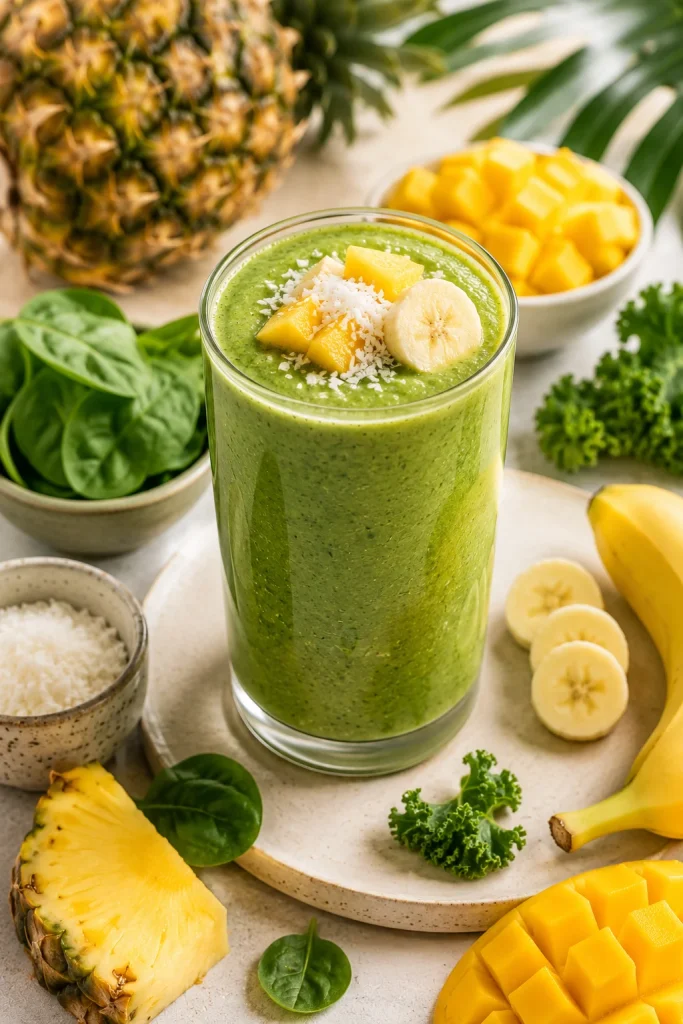
Let’s address the obvious thing immediately: it’s green. Genuinely, unmistakably green. And if that’s made you skeptical, that’s fair — because most green smoothies deserve skepticism. The ones that taste like a blended salad dressed up with half a banana. The ones that are technically nutritious and practically undrinkable. The ones you make once because you’re feeling virtuous and never make again.
This is not that smoothie.
This is the green smoothie that converts people. The one that lands on a table and gets suspicious looks from kids who claim to hate vegetables, and then gets drained to the last drop by those same kids who ask what was in it. The flavor is entirely tropical — mango, pineapple, coconut, lime — and the spinach, despite its starring visual role, contributes nothing detectable to the taste. What it does contribute is real nutritional substance to a drink that would otherwise just be a glorified fruit juice.
The trick is understanding what spinach is and isn’t good at. It’s terrible at standing on its own — raw, it’s grassy and slightly metallic. But it’s extraordinarily good at disappearing. Blended with assertive tropical fruit and coconut milk, it vanishes so completely that even the most committed vegetable-avoider in your household will have no idea it’s there.
That’s not a trick. That’s good recipe development.
Ingredients
(Makes 1 large serving or 2 smaller ones)
- 1 cup frozen mango chunks
- ½ cup frozen pineapple chunks
- 1 large handful baby spinach — about 1 cup packed
- ¾ cup canned coconut milk (light or full-fat, depending on how rich you want it)
- ½ cup water or coconut water
- Juice of half a lime
How to Make It
Step 1 — Greens and liquid go first.
This is the most important technique in this recipe. Add the spinach and coconut milk to the blender before any frozen fruit. Blend on medium for 20–30 seconds. You’re giving the greens a full head start — getting them broken down and suspended in the liquid before the frozen fruit chills everything and makes blending harder. Skip this step and you’ll end up with green flecks in an otherwise smooth drink, which is both visually disappointing and a sign that you got less out of the spinach.
Step 2 — Add the fruit.
Add frozen mango, pineapple, water (or coconut water), and lime juice. The order matters less from here — everything is going to blend together.
Step 3 — Blend hard.
Run your blender on the highest speed for 60 full seconds. Not 30, not 45 — 60. Spinach takes longer to fully integrate than fruit does, and giving it the full minute is what creates a completely smooth, fleck-free result.
Step 4 — Taste and adjust.
This is a step most people skip and they shouldn’t. Take the lid off and taste before pouring. Too sweet? Squeeze in a little more lime. Not sweet enough? Add a chunk of mango or a teaspoon of honey. The recipe is a starting point — the tasting is what makes it yours.
Step 5 — Serve immediately.
Green smoothies are best right out of the blender. The color is most vibrant, the temperature is coldest, and the texture is at its best. If you need to take it with you, seal it in a jar and drink it within 2 hours.
Flavor Profile
Taste: The mango arrives first — sweet, lush, unmistakably tropical. The pineapple adds a bright tartness that keeps it from feeling cloying. The lime gives the whole thing a citrusy edge that lifts everything. The coconut milk runs underneath all of it as a creamy, slightly exotic base. The spinach, genuinely, does not announce itself.
Texture: Smooth and creamy with a light, drinkable body. Not thick like the banana-oat recipes — this one moves. It’s more like a well-made juice than a milkshake, which makes it particularly refreshing on warm mornings.
Aroma: Tropical. Coconut and mango are what you smell, and they smell like summer regardless of the season.
Chef’s Tips
Always use frozen fruit, not fresh with ice. Ice dilutes as it melts. Frozen mango and pineapple create a colder, thicker, more intense smoothie without watering down the flavor. Fresh fruit plus ice is a reasonable substitute but produces a noticeably thinner, paler result.
Choose your coconut milk wisely. Light canned coconut milk gives a smooth, lightly creamy result with fewer calories. Full-fat canned coconut milk creates something richer and more indulgent — closer to a tropical dessert in a glass. Both are good. The choice depends on whether you want a refreshing morning drink or a genuinely filling meal. The carton coconut milk found in the refrigerated section is too watery for this recipe — it doesn’t provide enough richness.
Baby spinach, not regular spinach. Mature spinach has a stronger, slightly more metallic flavor and tougher cell walls that are harder to fully break down. Baby spinach is milder, more tender, and blends into virtual invisibility in a fraction of the time.
Low-powered blender? Pre-thaw slightly. If your blender sometimes struggles with frozen fruit, let the mango and pineapple sit at room temperature for 2–3 minutes before blending. This small amount of softening makes a significant difference to lower-powered motors without affecting the final temperature much.
Lime juice is not optional. It might seem like a garnish — half a lime, squeezed in. But this is the ingredient that makes everything else brighter and cleaner-tasting. Without it, the smoothie is good. With it, it’s notably better. Don’t skip it.
Variations Worth Trying
Creamy Banana-Tropical Green Smoothie
Add half a frozen banana to the base recipe. The banana adds body and a gentle sweetness that makes the whole drink feel more substantial and filling. This is the variation for mornings when you want something that genuinely holds you until lunch.
Protein Green Smoothie
Add 1 scoop of vanilla protein powder before blending. It integrates completely and invisibly into the tropical flavor — you won’t detect it at all. This bumps the protein from 3g to approximately 24g per serving and makes this smoothie a genuinely complete breakfast rather than a light starter.
Kale-Tropical Smoothie (Advanced)
Replace the spinach with 1 cup of curly kale with stems completely removed. Blend the kale with the coconut milk alone for a full 45 seconds before adding anything else — kale needs significantly more blending time than spinach. The result is earthier and more complex, with a deeper green color. Add an extra squeeze of lime to compensate for kale’s stronger flavor.
Coconut Water Version (Lighter)
Replace both the coconut milk and the water with 1¼ cups of coconut water. This creates a significantly lighter, more hydrating smoothie with fewer calories and less fat — closer in character to an agua fresca than a creamy tropical blend. Beautiful for hot mornings when you want something cold and refreshing but not heavy.
Nutrition Information
(Per full serving — approximate values)
| Nutrient | Amount |
|---|---|
| Calories | 280 kcal |
| Total Fat | 12g |
| Saturated Fat | 10g |
| Protein | 3g |
| Total Carbohydrates | 38g |
| Dietary Fiber | 4g |
| Natural Sugars | 28g |
| Added Sugars | 0g |
| Sodium | 55mg |
| Potassium | 620mg |
| Vitamin C | 65mg |
| Vitamin A | 1,800 IU |
| Iron | 2mg |
| Magnesium | 45mg |
About the fat content: The saturated fat here comes entirely from coconut milk, which is plant-based. Using light coconut milk reduces the fat content to approximately 5–6g total fat per serving while keeping the creaminess largely intact. Full-fat coconut milk produces approximately 18–20g total fat, which is higher but contributes significantly to satiety.
Why the Ingredient Combination Works
This isn’t a recipe that happened by accident. Mango and pineapple were specifically chosen because they’re both intensely flavored frozen fruits that retain their character even when blended with other ingredients. More delicate fruits — strawberries, peaches — can get swallowed by the coconut milk and spinach. Mango and pineapple don’t. They come through clearly.
The coconut milk is there for richness, yes, but also for a specific flavor purpose: coconut has a tropical sweetness that unifies the mango, pineapple, and lime into a single coherent flavor story. Without it, the smoothie tastes like fruits that happen to be in the same glass. With it, everything belongs together.
And the spinach — one cup packed — provides iron, folate, vitamins A and K, and a range of antioxidants, all while contributing no detectable flavor to the finished drink. It’s the most effective nutritional addition you can make to a smoothie without changing what the smoothie tastes like. That’s a remarkable ingredient when you understand it that way.
The Smoothie That Makes Mornings Feel Possible
Here’s the honest version of why this recipe matters: there’s a specific kind of morning where you know you should eat something real, something with actual vegetables, something your body would thank you for — but you also have twelve minutes and zero patience for washing a cutting board. This smoothie exists for exactly that morning.
It takes five minutes. Everything goes in the blender. The result is something that genuinely counts as a nutritious meal, genuinely tastes good, and genuinely doesn’t require you to like vegetables in order to enjoy it.
Make it once and you’ll understand. Make it twice and it’ll be in your rotation. Make it with your kids watching and you’ll spend the next week explaining how something that green can possibly taste that good.
That’s the trick. And now it’s yours.
Nutrition values are estimates and may vary depending on specific ingredients and brands used.