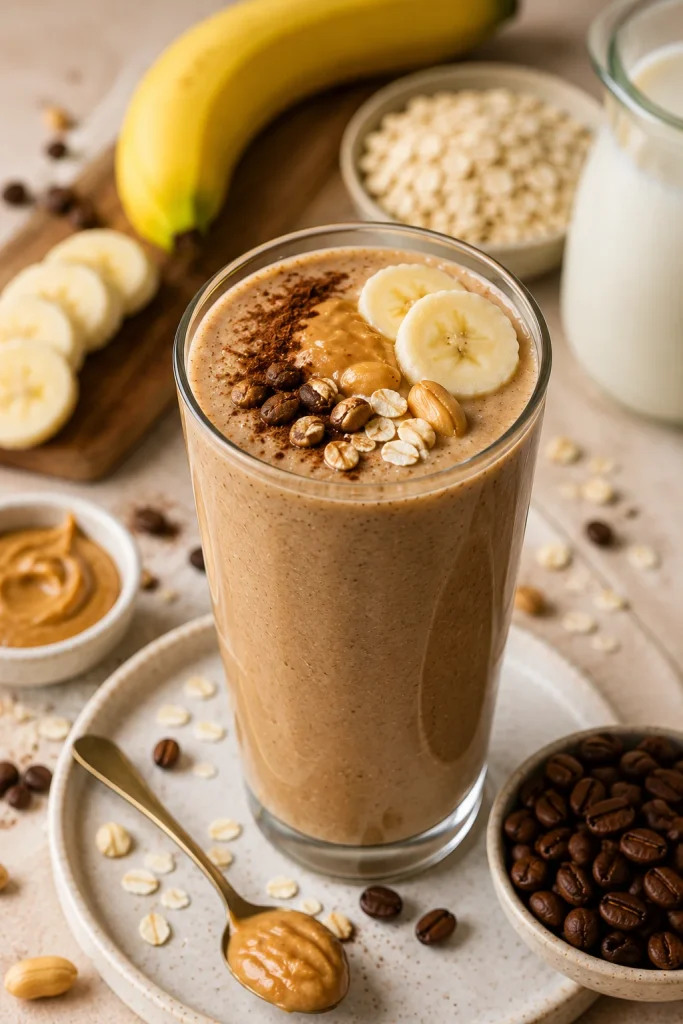
There’s a very good argument to be made that combining coffee and breakfast into a single glass is one of the better ideas anyone has ever had. Not just for the time it saves — though that matters — but because the flavors genuinely work. Coffee and chocolate have always been close friends. Peanut butter and banana have been partners for decades. And when you bring all four of them together in a cold, thick, creamy breakfast shake, what you get is something that feels indulgent, tastes like it came from a café counter, and is actually built on whole-food ingredients that carry you through the morning.
This is not a smoothie that apologizes for itself. It’s not a diet drink disguised as a treat, and it’s not a protein shake trying to pass itself off as something enjoyable. It’s a genuinely delicious breakfast that happens to have good nutritional bones — and that distinction matters, because the drinks you actually look forward to making are the ones that actually get made.
The secret, if there is one, is the cold brew concentrate. Not brewed coffee, not instant espresso powder, not room-temperature coffee from this morning’s pot. Cold brew concentrate specifically — because it has a smooth, rounded bitterness without the acidic edge that hot-brewed coffee develops. That smoothness is what allows the cocoa and peanut butter to come forward rather than getting overwhelmed by a harsh coffee flavor. It’s the detail that makes the difference between a breakfast shake you tolerate and one you look forward to.
Ingredients
(Makes 1 serving)
- ½ cup cold brew coffee concentrate (not regular brewed coffee)
- 1 frozen banana — ripe and spotted before freezing
- 2 tablespoons natural peanut butter, smooth
- 1 tablespoon unsweetened cocoa powder
- ¾ cup oat milk
- 1 teaspoon maple syrup — optional, depending on your banana’s ripeness
- 5–6 ice cubes
How to Make It
Step 1 — Everything except the ice.
Add the cold brew, banana, peanut butter, cocoa powder, oat milk, and maple syrup (if using) to the blender. No specific layering order is critical here — unlike some smoothies, these ingredients blend together readily.
Step 2 — Blend on high for 45 seconds.
This is long enough for the banana to go fully smooth and the peanut butter to integrate completely. The cocoa can be stubborn in dry form — giving it the full 45 seconds ensures there are no dry cocoa pockets in the finished shake.
Step 3 — Add the ice.
Drop in the ice cubes and blend again for 15 seconds. The shake will thicken noticeably and the temperature will drop to where it needs to be. Don’t blend the ice for too long — 15 seconds is enough, and over-blending ice produces a watery result as it melts too quickly.
Step 4 — Taste before you commit.
A very ripe banana makes this naturally sweet enough without any maple syrup. A less ripe banana (yes, even frozen ones vary in sweetness) may benefit from the full teaspoon of maple syrup. Taste before pouring and make that call yourself.
Step 5 — Pour into a tall glass and drink immediately.
This shake is best cold and fresh. It doesn’t hold well — the banana oxidizes slightly and the texture changes within 30 minutes. Make it, drink it, move on with your morning.
Flavor Profile
Taste: The cold brew comes through first — smooth and roasted, with that distinctive café depth. Then the cocoa deepens it into mocha territory. The peanut butter adds a rich, creamy nuttiness that sits underneath everything else and makes the shake feel genuinely substantial. The banana provides sweetness and rounds all the edges. It tastes, honestly, like a very good mocha milkshake — which is not the worst thing a breakfast can taste like.
Texture: Medium-thick. Not as dense as the banana-oat smoothie or the avocado chocolate blend — this one has more of a milkshake quality, which makes it easy to drink quickly when you’re running out the door.
Aroma: Roasted coffee and cocoa hit you the moment the blender lid comes off. If this doesn’t wake you up, nothing will.
Chef’s Tips
Use cold brew concentrate, not regular coffee.
This isn’t a fussy distinction — it’s a functional one. Cold brew concentrate has roughly double the coffee concentration of regular brewed coffee, and its flavor profile is fundamentally smoother because cold brewing never extracts the bitter acids that hot water releases from coffee grounds. If you use regular brewed coffee, you’ll need to use 1 cup instead of ½ cup to get comparable coffee flavor, and the result will be thinner and less smooth. Cold brew concentrate is sold in most grocery stores now and keeps in the refrigerator for 2 weeks.
Natural peanut butter only.
Commercial peanut butter — Jif, Skippy, and similar — contains added sugar, hydrogenated oils, and salt that will push this shake in a sweeter, less clean direction. Natural peanut butter, which contains only peanuts (and sometimes salt), lets the peanut flavor come through clearly and integrates more smoothly into cold drinks.
Cocoa type matters.
Unsweetened natural cocoa powder works well here. Dutch-process cocoa — which has been alkalized to reduce bitterness — works even better, producing a smoother, deeper, more complex chocolate note. If you have access to Dutch-process, use it.
Make the banana riper before freezing.
The banana is doing most of the sweetening work in this recipe. An underripe banana makes this shake taste slightly starchy and bitter. A very ripe banana — spotted, fragrant, soft — makes it taste like a legitimate dessert. Freeze at the right stage of ripeness and this shake works perfectly without any maple syrup at all.
The maple syrup decision.
Add it after blending, taste first. Some mornings you want it sweeter. Some mornings the banana takes care of everything. Maple syrup is a better sweetener here than honey (which can taste medicinal in cold coffee drinks) or white sugar (which doesn’t blend well into cold liquids).
Variations Worth Trying
Espresso Peanut Butter Shake
Replace the cold brew concentrate with 2 shots (approximately ½ cup) of cooled espresso. The espresso version is more intense — sharper coffee flavor, more pronounced bitterness that the banana and peanut butter have to work harder to balance. For serious coffee drinkers, this version is the better one.
Double Chocolate Peanut Butter Shake
Add 2 tablespoons of chocolate protein powder along with the cocoa. This turns the recipe decisively in the direction of dessert — rich, chocolatey, unmistakably indulgent — while bumping the protein content to approximately 25g per serving. If you’re making this as a post-workout breakfast, this is the variation to use.
Almond Joy Breakfast Shake
Replace the peanut butter with almond butter and add 2 tablespoons of unsweetened shredded coconut before blending. The almond butter has a more delicate, slightly sweet nuttiness compared to peanut butter, and the coconut adds a faint tropical note that transforms the whole thing into something that genuinely evokes the candy bar it’s named after.
Caffeine-Free Version
Skip the cold brew entirely and replace it with ½ cup of chocolate oat milk plus ½ cup of regular oat milk. The result is a straight peanut butter-chocolate shake without any coffee — still excellent, and the right choice for kids, for people who limit caffeine, or for late-morning smoothies when extra caffeine isn’t welcome.
Nutrition Information
(Per serving — approximate values)
| Nutrient | Amount |
|---|---|
| Calories | 390 kcal |
| Total Fat | 16g |
| Saturated Fat | 3g |
| Protein | 11g |
| Total Carbohydrates | 52g |
| Dietary Fiber | 5g |
| Natural Sugars | 22g |
| Added Sugars | 3g (if maple syrup used) |
| Sodium | 190mg |
| Potassium | 680mg |
| Magnesium | 85mg |
| Iron | 2.5mg |
| Caffeine | ~90mg (varies by cold brew brand) |
On the caffeine: The amount of caffeine in this shake depends entirely on your cold brew concentrate. Most commercial cold brew concentrates contain 150–200mg of caffeine per cup — at ½ cup, you’re looking at 75–100mg, which is roughly equivalent to a small cup of drip coffee. If you want more caffeine, use a full ½ cup of concentrate undiluted. If you want less, dilute the concentrate with water before measuring.
Why This Recipe Actually Works
Breakfast shakes that try to include coffee usually fail in one of two ways: either the coffee overpowers everything and the drink tastes like a protein shake with coffee dumped in, or the coffee gets so diluted by other ingredients that you may as well have had juice. This recipe avoids both problems.
The cold brew concentrate is measured carefully — ½ cup is enough to create a genuine coffee presence without drowning out the peanut butter and cocoa. The oat milk adds body and a faint oat sweetness that complements both the coffee and the banana. The peanut butter is there not just for flavor but for fat and protein that slow digestion and create a sustained energy curve rather than a caffeine spike followed by a crash.
The combination of approximately 90mg of caffeine plus 11g of protein plus 5g of fiber means this shake wakes you up and keeps you up — in the productive, sustained sense of that phrase rather than the anxious, jittery one.
A Word on Making This Your Own
Once you’ve made this recipe twice, you’ll know exactly which adjustments it needs for your preferences. Some people discover they love it with almond butter instead of peanut butter. Some find that a frozen banana with a little less ripeness than ideal benefits from a full teaspoon of maple syrup. Some add a pinch of cinnamon and find that it adds an unexpected warmth that makes the whole thing feel more complex.
All of that is the right way to cook. This recipe is a framework built from ingredients that work together in a specific and deliberate way. But a framework is a starting point, not a finish line.
Make it once exactly as written. Then make it yours.
Nutrition values are estimates and may vary depending on specific ingredients and brands used.